
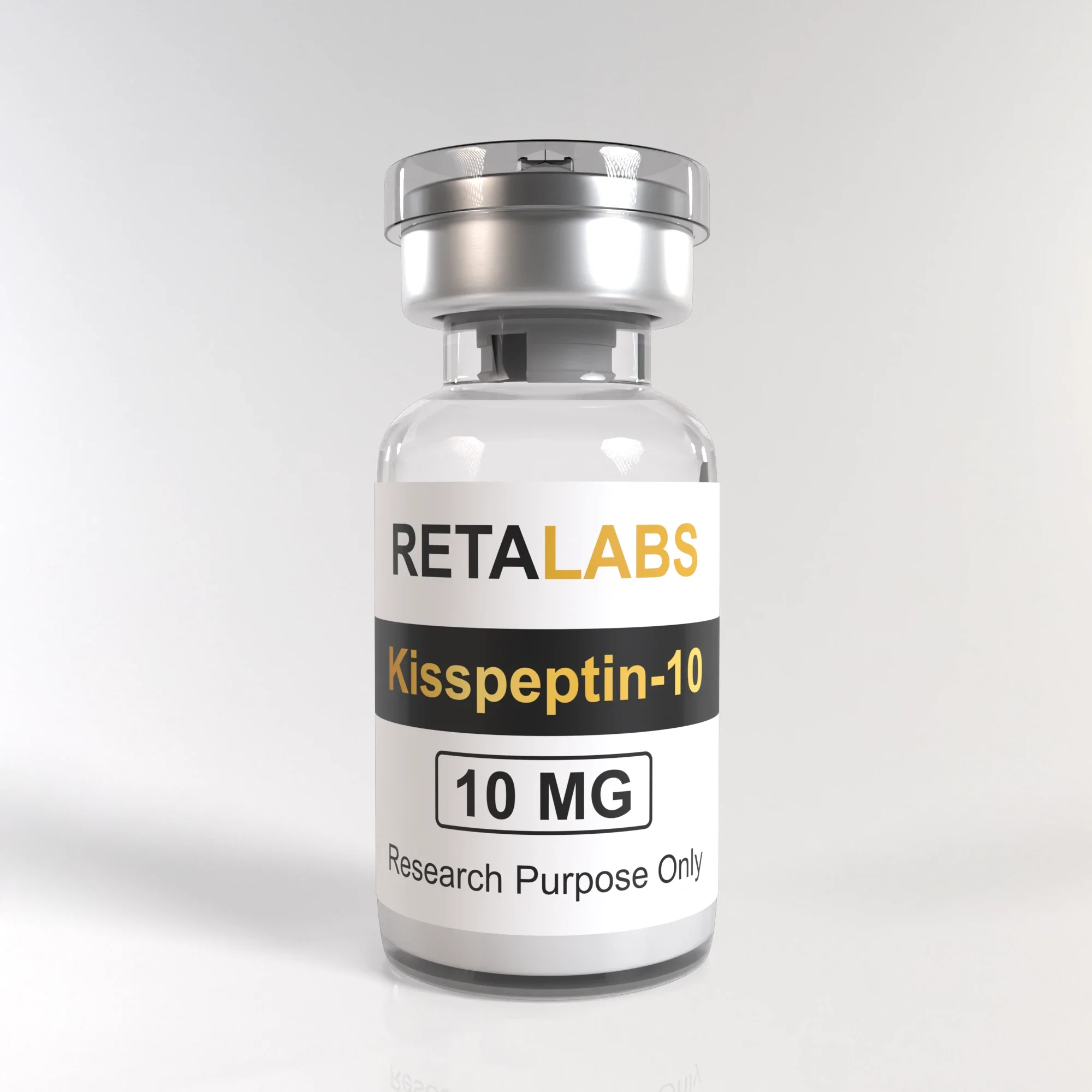
Kisspeptin-10
Price range: € 62,95 through € 72,95
Kisspeptin–10 is a biologically active peptide used in laboratory research to study regulation of the hypothalamic–pituitary–gonadal (HPG) axis. It is known for its role in activating gonadotropin-releasing hormone (GnRH) and is studied in relation to hormonal signaling and neuroendocrine regulation.
Kisspeptin-10 is a shortened, biologically active fragment of the endogenous kisspeptin protein and is applied in research models focused on hormonal communication and reproduction-related processes at the cellular and neurobiological level.
Mechanism of Action:
Kisspeptin-10 binds to the GPR54 (KISS1R) receptor, which is primarily expressed in the hypothalamus. Activation of this receptor stimulates GnRH release, which downstream influences the secretion of luteinizing hormone (LH) and follicle-stimulating hormone (FSH) in research models.
Through this cascade, Kisspeptin-10 is used to analyze neuroendocrine feedback mechanisms, hormonal pulse regulation, and signal transduction within the HPG axis.
Research Findings:
Preclinical and in-vitro studies show that Kisspeptin-10:
- Stimulates GnRH activity
- Plays a key role in hormonal signal transmission
- Is involved in regulation of reproduction-related processes
- Is used to study LH and FSH dynamics
Researchers use Kisspeptin-10 to better understand interactions between the brain and peripheral hormonal systems.
Research Applications:
Kisspeptin-10 is studied in relation to:
- Neuroendocrine regulation
- Hormonal signaling pathways (GnRH, LH, FSH)
- Fertility-related processes
- Puberty and reproductive research
- Hypothalamic function
Scientific References:
- Lee et al., 2001 (Journal of Biological Chemistry)
- Dhillo et al., 2005 (Journal of Clinical Endocrinology & Metabolism)
- Pinilla et al., 2012 (Endocrine Reviews)
Research Context:
- For laboratory and research use only
- Not developed or intended for human consumption
- Not intended for veterinary or medical applications
Related products
-
PT-141 (Bremelanotide)
Price range: € 47,95 through € 57,95 Select options This product has multiple variants. The options may be chosen on the product page
Reviews
There are no reviews yet.